
QuillBot Alternatives for Humanizing AI Text in 2026: What Actually Works

Six weeks ago, a coaching student emailed me in a panic.
Her essay had flagged. She’d run it through QuillBot three times. Reworded practically every sentence. Still flagging. Could I take a look?
I opened the draft and the problem was obvious to me within about thirty seconds. She’d been paraphrasing AI text. Not humanizing it. Those are two different operations and the difference between them is exactly why she spent an entire afternoon rewriting and ended up right where she started.
Here’s the short version: the best QuillBot alternatives for humanizing AI text are tools built to restructure output at the pattern level, not just swap vocabulary. QuillBot changes what the words say. Walter Writes, texthumanizer.com, essayhumanizer.ai, and humanizeai.tech change the structural patterns that detectors are trained to recognize. Not the same job.
Why QuillBot Doesn’t Fix the Detection Problem
Let me say what QuillBot is genuinely good at before I explain what it can’t do. Condensing. Expanding. Rephrasing for clarity or register. I’ve used it in my own workflow for specific things. It does what it says. I’m not interested in dunking on a product for not doing a job it was never trying to do.
Here’s the thing though: AI detectors don’t maintain a list of AI words. There’s no banned vocabulary. What they analyze is structural patterns. Sentence length uniformity: how consistently sentences fall in the same length range. Transition predictability: do paragraphs connect in the same way over and over. The absence of burstiness, which is that uneven, slightly chaotic quality that human writing has because people think while they write rather than generating output from a probability distribution.
When you run ChatGPT output through QuillBot, you change what the words say. The structural fingerprint stays. My student paraphrased her draft three times. The GPTZero score barely moved. The patterns were still doing what they were doing from the first line ChatGPT wrote, underneath a fresh layer of synonyms.
Ask me how I know that’s a pattern and not an outlier.
That’s the ceiling on QuillBot as an AI humanizer. It was never designed to be one.
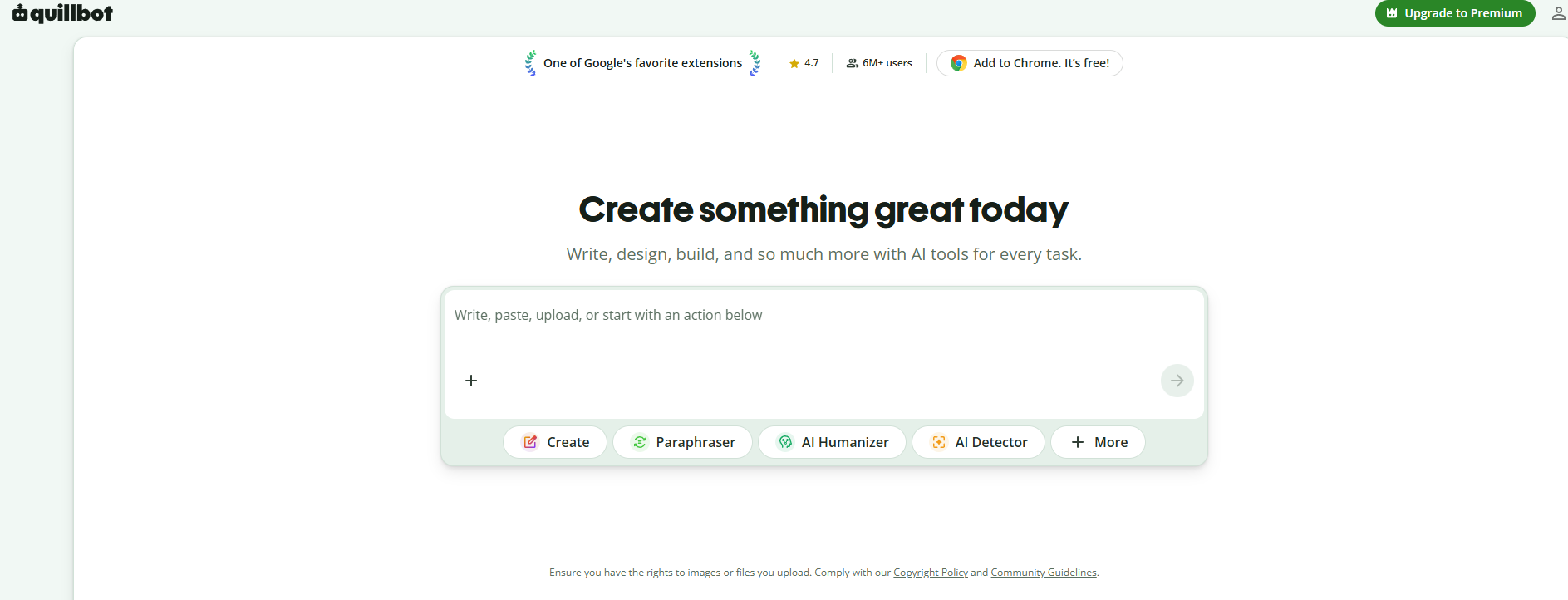
The Best QuillBot Alternatives for Humanizing AI Text
These are the tools I recommend when the goal is moving a detection score, not just rephrasing sentences.
1. Walter Writes - Best Quillbot alternative
This is what I use. Full stop.
Walter Writes rewrites at the structural level: sentence rhythm, cadence, transition architecture, paragraph structure. Not synonym substitution. The output reads differently because the mechanism is genuinely different from paraphrasing.
Three modes: Simple, Standard, Enhanced. Simple handles light polish on content that’s already mostly human in its patterns. Enhanced is what you use on AI-heavy drafts going through strict detection, Turnitin or GPTZero. The before/after scores on the site match what I see in my workflow: drafts running at 98% AI on GPTZero come out at 99% Human after an Enhanced pass. There’s a built-in detector that scores you immediately after rewriting, same editor, no copy-pasting between tools.
I’ve been doing this for ten years and Walter Writes is the only tool I’ve tested that consistently preserves meaning, argument, and voice through a full structural rewrite. Most tools at this level fix the detection score by wrecking the logic. Walter doesn’t. Full details at walterwrites.ai/ai-humanizer/.
2. texthumanizer.com
Focused AI-to-human converter. Handles the basic structural adjustments most AI content needs, doesn’t require much setup, reliable for shorter content and marketing copy. Less mode control than Walter. Good for a quick pass when you don’t need the full treatment.
3. essayhumanizer.ai
Built for academic writing, which means it takes a conservative approach to restructuring. Useful for students and researchers who need output that holds formal register. Less suited for brand content or anything that needs a conversational voice, but the right pick for academic submissions.
4. humanizeai.tech
Clean interface, fast, works well on conversational AI text and blog-length pieces. You’re trading granular control for speed. Doesn’t have Walter’s modes, but for a short draft that needs a quick pass, it does the job.
5. Undetectable.ai
Covers most AI models and the scores are generally solid. On longer pieces, meaning fidelity slips. You need to edit after the run, not just paste and submit. For shorter content it’s more reliable. Not my first recommendation but it’s widely used.
6. Wordtune
More in QuillBot’s territory than a dedicated humanizer. Wordtune rewrites and polishes but doesn’t target structural detection patterns. Good for editorial cleanup. I wouldn’t use it to move a GPTZero score.
QuillBot vs Walter Writes: The Difference That Actually Matters
This particular comparison has come up more in the last six months than the previous two years put together. People are shopping for something better. That tracks.
The difference is this: QuillBot paraphrases. Walter humanizes. Those aren’t the same operation.
QuillBot substitutes vocabulary and adjusts word order. The sentence reads differently at the surface. But the uniform, flat rhythm that AI-generated content carries, the thing GPTZero and Turnitin and Originality.ai are calibrated to catch, that rhythm stays put. Walter Writes restructures how ideas are expressed. Sentence lengths vary. Transition patterns break. The predictable cadence that GPT-4 and Claude output by default gets interrupted at the structural level, not just dressed up at the surface.
I’ve run the same documents through both tools side by side. A piece at 94% AI after QuillBot often comes out at 92% Human after Walter. Consistently, on anything over 400 words, the gap is significant.
Which is a different conversation from which tool wins on everything. QuillBot has a grammar checker, a summarizer, citation paraphrasing. For those jobs, it’s the right tool. For humanizing AI output, the two tools aren’t competing at the same task. Knowing that distinction saves a lot of wasted rounds of rewriting.
Is QuillBot a Good AI Humanizer?
Short answer: no.
QuillBot’s feature set is built around paraphrasing, summarizing, and grammar. Whatever small improvement it sometimes produces in detection scores is a side effect of paraphrasing, not a designed humanization outcome. There’s no structural rewriting engine in it.
Some workflows involve running AI text through QuillBot first, then editing heavily by hand, and the score moves enough to matter. But in that workflow, QuillBot is doing the paraphrasing step. The humanizing work is happening in the human editing stage. That distinction matters if you’re trying to build something repeatable.
If you’ve been searching for a QuillBot humanizer feature specifically, you won’t find one. Not a criticism of the product. Just not what it does.
The Best Paraphrasing Tool Alternatives When Detection Is the Real Goal
If you’re looking for paraphrasing tool alternatives because AI detection is the problem you’re trying to solve, the framing needs to shift. You’re not looking for a paraphrasing tool. You’re looking for an AI humanizer, which is a different product category with a different mechanism.
Walter Writes covers both. The paraphrasing tool runs the same structural rewriting engine as the humanizer, so the output is built to move detection scores, not just rephrase wording. When you need a traditional paraphrase for something else, it does that too. One tool, two functions.
My standard answer to clients who ask about paraphrasing tool alternatives: stop framing it as a paraphrasing problem. Detection scores don’t respond to vocabulary changes. They respond to structural ones. Fix the structure.
I went through the full testing breakdown in my piece on which AI humanizer tools actually work if you want the detailed version with scores.
FAQ: QuillBot Alternatives and Humanizing AI Text
Does QuillBot bypass AI detection?
Sometimes, partially, on lightly AI-generated content. On heavily AI-generated text, it rarely moves the needle enough to matter. Structural patterns survive paraphrasing. The surface changes. The patterns underneath don’t. It’s not a reliable bypass tool, and building a production workflow around it that way will cost you.
What’s the difference between a paraphrasing tool and an AI humanizer?
This is the question I wish more people asked before they started rewriting their drafts four times. A paraphrasing tool changes how words and sentences are arranged. An AI humanizer changes the structural patterns that detection algorithms recognize. Detectors don’t analyze vocabulary. They analyze rhythm, predictability, and burstiness. Paraphrasing addresses the surface. Humanizing addresses the structure. Two different problems, two different tools.
Does Walter Writes work better than QuillBot for AI humanizing?
Yes, and it’s not a subtle difference. Walter was built for this job. QuillBot was built for paraphrasing. Comparing their detection performance means comparing a tool that addresses the problem to a tool doing something adjacent that doesn’t fix the underlying patterns. The full mechanism breakdown is here.
Which QuillBot alternative works best for academic writing?
essayhumanizer.ai handles academic register most conservatively, which matters for formal submissions. Walter Writes has an academic tone mode as well. For anything with real stakes attached, test both against an academic-calibrated detector before submitting. My earlier breakdown on AI humanizer tools for writers covers the academic use case in more depth.
My student switched to Walter Writes after that afternoon. Got her score down in one pass. The craft still matters, running output through a humanizer isn’t the same as thinking carefully about what you’re writing, but the right tool at least makes the mechanical problem a mechanical one.
The paraphrasing conversation and the humanizing conversation are two different conversations. Most people collapse them into one and then wonder why three rounds of QuillBot still leaves them flagging. Now you know.
Hit reply if you have questions. I answer everything.